Our asses are grasses…
Our whole evolution is made from a blade

Before spring has sprung, grass is beginning to amass. Passed over for passover, she is so often shafted. I know this subject might seem really dry, but please…. stick with it. One of my favourite ingredients in my skincare is a grass, so it matters.
Grasses are some of the most underestimated plants on the planet. They are most often the very first sign of life in both desert conditions and the highest altitudes where water comes in as snow. I would argue that our entire planet is only viable because of grasses. Humanity itself has blossomed off the backs of these plants in our evolutionary rise from prehistory to advanced civilisations and societies today.
We now grow over 1.5 billion metric tonnes of grasses that we figured out how to modify. That’s rice, corn, and wheat - all three of which, are grasses! Mankind wouldn’t be where we are today without this plant that we think of as simple. It’s actually not only feeding the entire world right now, it’s also changing the planet daily.
In this issue, we will stand up and give some respect to this pioneer of the plant world, this bringer of life, this breaker of rocks. Grass is seriously a beast of a plant — when you aren’t struggling to keep it alive right in your front yard.
Grasses play a critical role in soil creation and rejuvenation
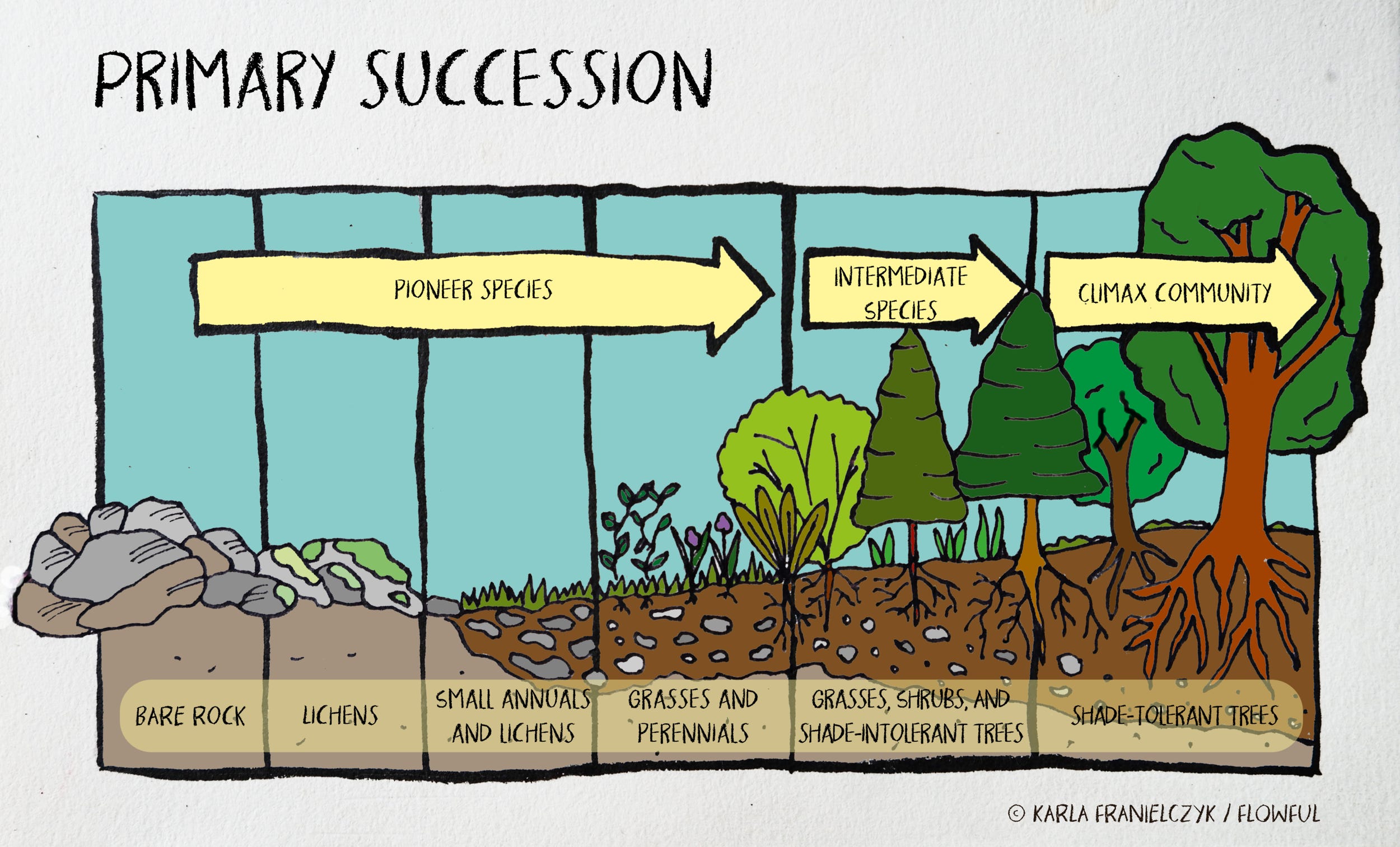
Soil didn’t leap into spontaneous existence from the ethers. It is created in an extremely long and arduous process called primary succession that begins when an area consists only of barren bedrock or fields of rocky deposits left behind by retreating glaciers.
These sterile swaths of rock are first broken down by a combination of natural wind and water erosion, freeze and thaw cycles and colonisation by pioneer species of lichens that excrete mild acids chemically breaking down the rock. Gradually, mountains become boulders, boulders become smaller rocks, rocks become pebbles and pebbles become sands.
As pockets of pebbles and sands begin to form, these areas are further colonised by more pioneer species: grasses and small annual plants that can grow with almost no soil.
Generations of these pioneer grasses and plants die and grow again and slowly build an organic layer that creates soil capable of supporting intermediate species of small shrubs and small trees. Without the organic matter added by pioneer species like grass, there would just be a world filled with mosses, lichens and sands.
Grasses bring chocolate milkshakes to the yard. Yep. They provide food for hooved animals that gently till the land as they graze, mixing organic matter and creating water collecting depressions that provide ripe conditions for seed germination. The animals digest these grasses and produce - yeah we are going there - POOP, MANURE, DUNG, DROPPINGS, BUFFALO CHIPS, LAND MINES… whatever you want to call it.
These droppings of partially broken down organic matter are the fertiliser that builds the soil and recycles nutrients which will nourish future plants. Grasses and their seeds (grains) provide food for mice and other small rodents that then become prey for carnivore predators. Grasses are the oft forgot unsung hero basis of many food chains and ecosystems around the world.